
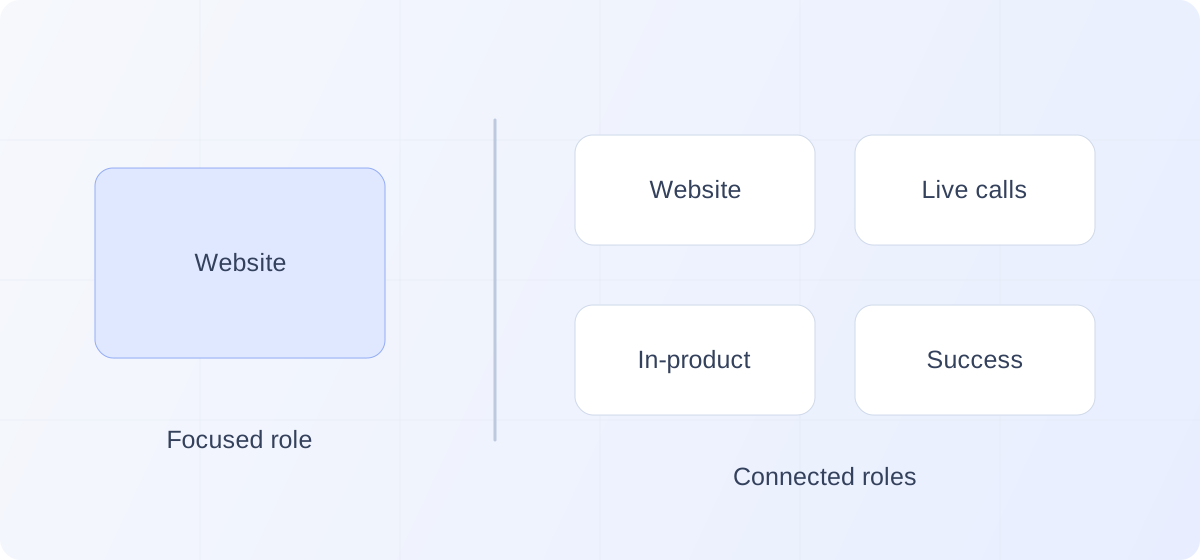
TL;DR: The right 1mind alternative depends on the first job you need done. Inbound AI SDRs suit qualification and booking but do not automatically replace 1mind’s live-call, in-product, and customer-success roles. Demo-centered tools let prospects experience the product live. Have vendors quote the same initial scope, broad or narrow, and expand only after clear results.
Evaluating 1mind raises a question that can change the entire purchase:
How much of the customer journey are you trying to automate now?
1mind presents several connected roles: website inbound, live-call assistance, in-product guidance, and customer success. Its Ride-Along offering describes technical help and demonstrations during calls, while its customer-success offering extends into onboarding, adoption, and expansion or renewal signals.
A company buying only website qualification is making a different decision from one planning to use all of those roles.
That is where an alternatives comparison should begin.
A narrower product may be a better fit for a narrower requirement. A broader platform may be justified when the company has the use cases, data, and operating capacity to benefit from it.
This guide is published by Kassie, which is included below. Recommendations reflect fit inferred from published product information, not independently verified superiority in conversion results.
Decide whether you need a website rep or a wider platform
Write down the first job the purchase must complete.
Does a prospect need a useful answer and a qualified meeting? Do they need to experience the product live? Do your representatives need technical assistance during calls? Are you also trying to support existing customers?
Keep those requirements distinguishable.
An excellent answer to a public product question does not establish that an agent can safely act inside a customer account. A strong website demonstration does not establish that an ongoing adoption workflow will succeed.
Shared infrastructure can support several roles. Each role still needs its own permissions, configuration, and evidence.
Your shortlist should match the scope you intend to deploy rather than the maximum scope a vendor can describe.
Do not reduce the decision to the avatar
1mind’s current website displays realistic, soundwave, and fictional presentation options. It would be inaccurate to treat a human-looking avatar as the only possible interface.
The more useful questions concern the interaction itself.
Can a prospect use the experience without audio? How does it behave on mobile? Does the visual help explain the product, or compete with the information? Can the prospect get to the next step without unnecessary performance?
Evaluate those questions with the formats actually offered.
Presentation matters. It should support a useful conversation rather than substitute for one.
The alternatives to consider
Kassie: focused on generating qualified pipeline from the website
Kassie’s current work is website prospect conversations, qualification, and meeting booking for B2B companies.
Growth starts at $1,000 per month, billed annually, or $1,500 per month, billed monthly. Enterprise pricing is custom. Kassie includes dedicated customer success.
Consider Kassie when the immediate requirement is a focused inbound implementation. She should be evaluated on how well she represents your business and helps suitable prospects move forward.
Her current offer is not a like-for-like replacement for 1mind’s live-call assistance, in-product guidance, and customer-success roles combined.
Qualified: website inbound connected to email nurture
Qualified’s Piper supports website conversations over text, voice, and video, with separate capabilities for inbound email engagement.
Consider it when your priority is a broader inbound marketing workflow rather than live-call participation or customer success.
Map the handoff between the website, email, and the sales team. That continuity should be part of the evaluation, not inferred from the presence of several channels.
Docket: a product-knowledge and qualification deployment
Docket’s published packages combine its knowledge layer with website conversations, CRM synchronization, and meeting booking. Its Growth plan is traffic-based and includes implementation by its customer-success team.
Consider it when you need the website agent to work from substantial product and sales knowledge but are not purchasing the full set of roles described by 1mind.
Ask which deployment requirements are included and which need a higher package. Confirm how your team controls sources and resolves knowledge gaps.
Supersonik: live product expertise across evaluation and adoption
Supersonik describes agents that operate and explain software live, with use cases across sales, marketing, customer success, and enablement.
Consider it when the central requirement is interacting with the product itself rather than answering questions about it.
Compare the exact workflows you need, including what happens when a prospect changes direction during a demonstration.
Product access, session isolation, and maintenance of the live environment belong in the evaluation alongside conversational quality.
Hobbes: a demo-centered first interaction
Hobbes focuses on website demonstrations through a live product sandbox, with discovery and qualification around that experience. Its pricing page organizes packages by lead volume.
Consider it when the primary job is letting prospects experience the product without waiting for a scheduled demonstration.
Confirm what counts toward the package allowance and how the demo environment stays current.
A demo-centered purchase should be judged on whether the prospect understands the product better, not simply how long the session lasts.
Storylane RepX: conversation built around an interactive-demo library
RepX offers discovery and qualification alongside interactive demos. Storylane’s plans distinguish RepX from the separate Demo Suite offering.
Consider it when your team already has, or is prepared to maintain, product demonstrations that answer common evaluation questions.
Ask whether the selected package supports the depth and format of demonstration you need.
Reusing a relevant visual asset can be effective without requiring an agent to operate every part of the live product.
Spara: configurable engagement across channels
Spara offers chat, email, workflows, and broader packages that add voice and AI demonstrations. Its platform also describes use cases beyond website inbound.
Consider it when the replacement needs to coordinate multiple engagement workflows.
Begin with a specific sequence, such as website question, qualification, booking, and follow-up. Determine which actions are autonomous, which require review, and which remain with your team.
Breadth is useful when the handoffs are clear.
Chili Piper: the website conversation and the scheduling operation
Chili Piper’s Chat AI offers prospect answers, qualification, and booking. Form Concierge addresses qualification, routing, and scheduling from web forms.
Consider it when the core requirement is getting suitable prospects to the appropriate representative across several entry points.
This is a different purchase from a product expert attending calls or supporting customer adoption.
That difference can be an advantage when you need a well-defined conversion workflow rather than a wider platform.
Fin for Sales: sales and service with distinct roles
Fin for Sales is relevant when your intended scope includes both prospect qualification and customer service within an Intercom environment.
Intercom documents separate sales and service configuration, native support for Calendly and Chili Piper Concierge booking, and a human takeover that stops the agent from continuing the conversation.
Consider it when the surrounding helpdesk and customer-conversation environment fit your operating model.
Verify role-specific content permissions. Material approved for resolving a private support issue is not automatically appropriate for a public sales conversation.
Compare the scope behind the quote
Do not compare a website-only quote with a proposal covering website engagement, live-call assistance, and customer success as though the difference is simply price.
Ask each vendor to quote the same initial scope.
Name the role, the audience, the deployment surface, the required integrations, the anticipated volume, and the support expectations.
Then request the economics of expansion separately.
This helps answer two different questions: what the first deployment costs, and what happens if you later want additional roles.
Also confirm what is generally available, what requires custom implementation, and what is still being introduced.
A capability on a roadmap may be relevant to the long-term relationship. It should not be counted as a delivered component of the current purchase.
Human involvement is not a binary distinction
Do not assume one vendor uses people and another excludes them.
1mind’s Ride-Along description explicitly says the representative stays in control while the agent provides technical help and demonstrations on request.
The useful comparison is where human judgment enters each workflow.
Who approves knowledge changes? Who can intervene in a live conversation? Which actions need permission? What happens when a request involves an exception or a sensitive account?
A platform can automate routine work while preserving human control over consequential decisions.
Ask to see the controls and the exception paths. A statement that a product is “human-in-the-loop” is not sufficient by itself.
Decide what success means for the first role
A website rep should be evaluated on the prospect experience and the qualified opportunities that follow.
A demo agent needs to help prospects understand relevant product workflows.
A customer-success role needs a different set of measures around adoption, issue resolution, or account outcomes.
Do not combine those jobs into a single engagement number.
For the first deployment, choose a measurable result and the evidence needed to assess it. Confirm the operational requirements before expanding.
A successful focused deployment can create a sound basis for a broader purchase. A broad initial purchase can make it harder to discover which part is working.
The better sequence depends on the business, but the need for clear evidence does not.
Frequently asked questions
Is an inbound AI SDR a complete replacement for 1mind?
Only when website work is the scope you need. It is not automatically a replacement for live-call assistance, in-product guidance, and customer-success workflows.
Do 1mind alternatives have to use an avatar?
No. Presentation options vary, and 1mind itself lists alternatives to a realistic human appearance. Compare the actual formats and how they work for your prospects.
Which alternative should a smaller B2B team evaluate first?
Start with the unresolved job and the operating resources available. A focused qualification-and-booking need can justify a different shortlist from a product-demonstration or support-consolidation project. Headcount alone does not determine the answer.
Buy the role you are ready to operate
A platform can be valuable without every business needing every role immediately.
Define the first job. Give it the right knowledge and permissions. Verify that it works. Establish the outcome before expanding the assignment.
For Kassie, that first job is clear: help B2B companies turn more website prospects into qualified pipeline.
The prospect is already there. Make the conversation worth having.