
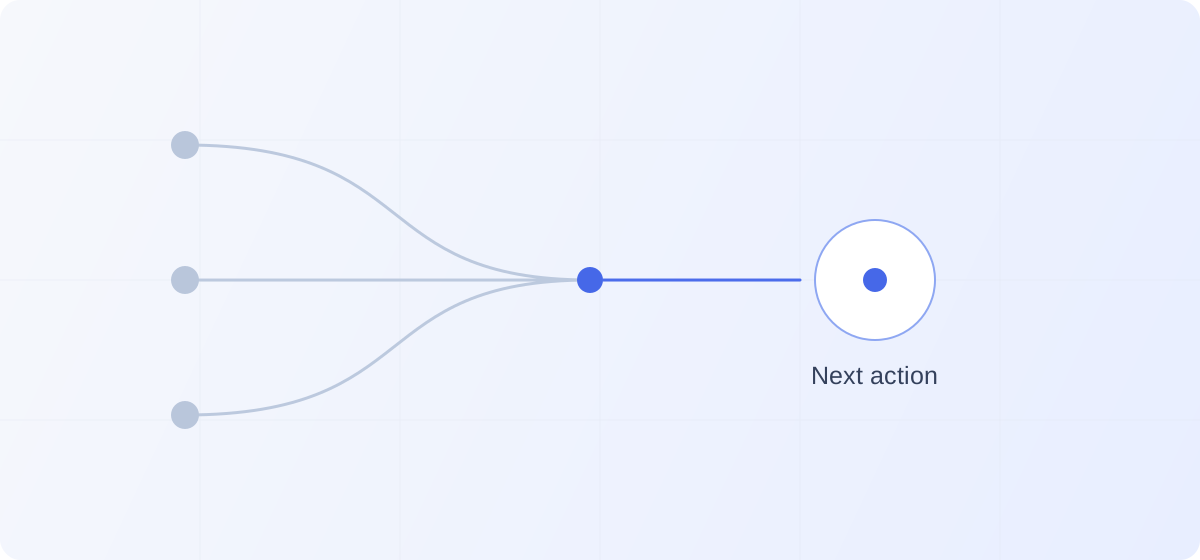
Imagine asking a software company whether you can start with one department. The answer is yes, but getting there requires a form, a qualification call, and an introduction to somebody who can finally explain the rollout.
Everyone involved may be helpful. The process still makes three people do the work of one answer.
That is the useful starting point for understanding AI in inbound sales. Before asking how much of the sales process can be automated, ask how much of that process the buyer needed in the first place.
When the website resolves routine buying questions, the sales team inherits a different job. Its responsibilities, incentives, and operating budget need to change with it.
What Anthropic actually reported
In a September 30, 2026 account, Anthropic described an internal buying agent built on Claude Managed Agents. It serves buyers across its website, product, and email, with a choice of agent or salesperson. Conversations can lead to checkout, a human handoff, or an answer without a purchase.
Anthropic reports that buyers escalated by the agent become opportunities more than twice as often as leads from its previous form and close about five days faster. One engineer built the first version in a few weeks.
These are company-reported results for agent-escalated buyers. They do not establish overall website conversion lift: the article does not report how comparable those buyers were to the earlier form leads. Anthropic describes its own deployment rather than a standalone sales product.
The useful question for other revenue teams is what they would change in their own organization if some buying work could happen directly on the website.
Stop making the meeting carry every job
A meeting can serve several purposes. A buyer may need to see a complex workflow, involve a technical specialist, negotiate terms, or decide whether the problem is worth solving. Those are good reasons to bring people together.
But meetings also get used as containers for information that could have been provided earlier. A question about a standard feature becomes discovery. A request for an implementation guide becomes a demo. A known commercial restriction surfaces after everyone has compared calendars.
Consider a fictional operations team evaluating scheduling software. They need to know whether contractors can use the product without purchasing full employee seats. The policy is published, and their use case fits it.
If the website can explain that policy accurately, the next conversation can begin with the operational problem: how to coordinate those contractors across locations. If it withholds the answer until a call, the salesperson starts by unlocking information the buyer should already have had.
The question for the revenue leader is specific: which tasks on the path to purchase actually require a meeting? List them. For each remaining task, decide whether the buyer can complete it independently or through a useful website conversation.
This can reveal opportunities to simplify the buying process before adding more automation.
Allocate human attention by consequence
Company size is a useful routing signal. It is a poor substitute for understanding what needs to happen next.
A buyer at a large company might need a standard answer about compatibility. A smaller company might have an unusual deployment constraint that needs a specialist. Sending both through the same qualification sequence can waste time in opposite directions.
A more useful approach is to consider the consequence of the next decision.
| Buyer’s immediate need | Appropriate responsibility |
|---|---|
| Understand an approved product capability | Provide a clear answer grounded in current documentation. |
| Choose between supported configurations | Explain the relevant differences and confirm the facts that affect the choice. |
| Change a commercial commitment | Involve someone authorized to approve the change. |
| Resolve a disputed or uncertain requirement | Bring in the relevant specialist with the unresolved question intact. |
This division gives an agent meaningful work while preserving authority where it matters. The agent can help a buyer understand the standard offering without acquiring the power to invent a new one.
For the salesperson, the handoff becomes more purposeful. “This account meets our size threshold” is less useful than “This team needs a deployment exception, and the answer determines whether they can proceed.”
Human involvement earns its place through the problem it resolves.
Someone still has to own the buyer’s progress
Traditional lead assignment creates a visible owner. A name enters a queue, a rep receives it, and the organization can ask what happened next.
An agent that resolves more conversations changes that arrangement. There may be no assigned rep, even when the conversation reveals a problem worth addressing. The buyer might discover that a requirement is unsupported, encounter an error, or leave after receiving an answer that was accurate but incomplete.
Who notices? Who decides whether anything should change?
This is where an AI deployment becomes an operating responsibility. Give a named person ownership of the experience, including conversations that never become opportunities. Engineering can own reliability, product specialists can own facts, and sales can own commercial decisions. One accountable owner should connect those contributions.
That owner does not need to read every conversation. A manageable review can sample completed interactions, inspect unresolved questions, and examine corrections from sales. The purpose is to discover where the system helped a buyer progress and where it created extra work.
Without that responsibility, a fast interface can conceal a slow organization. The website replies instantly while an unresolved requirement waits indefinitely for someone to act.
Incentives have to follow the new process
Suppose the agent answers routine questions before a buyer reaches sales. The remaining conversations may require more judgment, involve more stakeholders, or take longer individually.
A manager who continues to reward only the number of calls completed could punish the team for doing the work it is now supposed to do.
The same problem appears with meeting targets. If an informed buyer can proceed without a call, forcing a booking protects the metric while adding friction to the purchase. Conversely, removing too many handoffs can leave complex buyers without the expertise they need.
Set expectations around the work the team now owns. For one segment, that might be helping qualified accounts resolve deployment requirements. For another, it might be turning an initial evaluation into a shared plan with the buying group.
Then inspect whether the changes produce useful opportunities and successful customers. Keep the full website-to-pipeline journey visible, including existing forms and direct sales conversations. A channel can improve its own numbers by taking credit for activity that would have happened elsewhere.
The organization should reward commercial progress wherever the buyer chooses to make it.
An easy build still needs an operating budget
The appeal of assembling an agent quickly is obvious. It lowers the cost of trying an idea. It does not tell a company what the idea will cost to operate over a year.
An internal build needs someone to maintain the connections, review changes, investigate mistakes, and decide which improvements deserve attention. A purchased product needs ownership too, even if the vendor handles much of the infrastructure.
For a revenue team, the useful build-or-buy question is whether the organization can keep this buying experience dependable as its own business changes.
Imagine a pricing change goes live on Monday. An old implementation document remains in circulation. A sales manager has approved a temporary exception for one account. The agent needs to represent the standard offer correctly while keeping that exception confined to the right situation.
That is ordinary commercial maintenance. It still needs a process, an owner, and time in the budget.
Compare options using the full work involved: setup, review, incident handling, source updates, integration maintenance, and customer impact when something breaks. A low software bill can coexist with a demanding internal workload.
An evaluation of the agent should therefore include the people who will operate it after the demonstration ends.
Find the work your buyers are waiting on
Review twenty recent inbound conversations. For each, record what the buyer needed, why a person became involved, and what remained unresolved afterward. Separate work that required expertise from work that existed because information, authority, or ownership was missing.
Those categories point to different decisions. If buyers repeatedly need the same approved answer, improve access to that information. If they need a technical judgment, make the specialist easier to reach with the necessary context. If they need an exception, clarify who can approve it. If nobody follows up on unresolved questions, assign an owner.
This exercise can change the deployment plan. A team expecting to automate qualification may discover that its biggest delay comes from an implementation question that nobody owns. Hiring another qualifier would leave that problem intact. So would adding a faster conversation at the front of the queue.
Keep a path to a person available throughout. Some buyers will prefer one, and some situations will require one. The useful measure is whether the buyer gets the help needed to proceed, with fewer avoidable steps along the way.
Frequently asked questions
Does an AI buying agent make inbound sales teams unnecessary?
No. It changes which tasks may need their attention. The useful design question is where a person improves the buyer’s decision or resolves something the agent cannot handle within its authority.
Is direct checkout necessary for an AI inbound sales agent?
No. A negotiated B2B purchase may require substantial human work. The agent can still help by resolving preliminary questions and arranging an appropriate next step. Checkout is suitable only where the offer and purchasing process support it.
What should a revenue leader decide first?
Choose the buying task the agent will own, the limits of its authority, and the person responsible for its ongoing performance. Those decisions make the product requirements much clearer.
The next time a prospect asks a straightforward question, trace the work required to answer it. Count the people, systems, and waiting periods involved. Each step should have a reason the buyer would recognize.
That is where a better inbound process begins.