
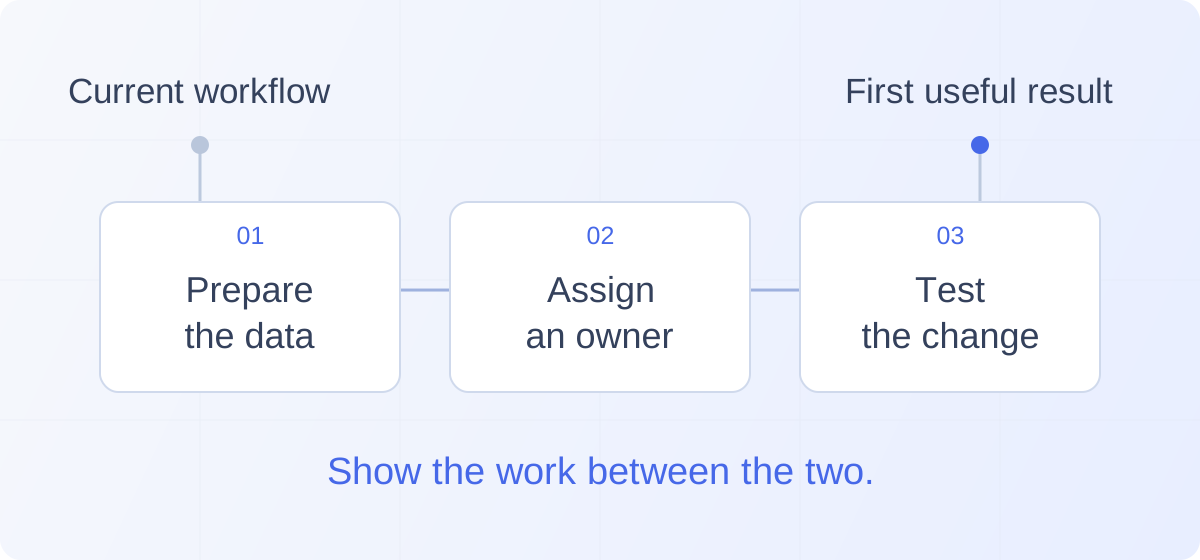
Your product wins the comparison. The buyer agrees the current system is frustrating. Then they renew it for another year.
Before rewriting the competitive pitch, look at the work required to switch. Marketing can help by showing what must move, who must do it, what can stay in place and how the buyer reaches a first useful result. A better product becomes a more credible purchase when the change looks manageable to the people doing it.
The subscription is on your pricing page. The project is on their calendar.
Put the buyer's work in the picture
Take a contract-management platform promising to prevent missed renewals. The finished dashboard looks excellent. To get there, the buyer may have to gather contracts from several departments, verify renewal dates, assign an owner to each agreement and decide who responds to the reminders.
Those tasks belong in the evaluation. A video of the reminder arriving leaves them unresolved.
Ask the implementation team to walk you through a recent launch from the customer's side. Where did the customer have to make a decision? What access did they need? Which task waited for someone who was not in the sales process?
Turn the answers into a short explanation of getting started. Name the customer responsibilities alongside the vendor's. If configuration usually takes a day once clean data arrives, avoid presenting the day as the whole implementation. Explain what “clean” means and who prepares it.
This is useful marketing material because it helps an interested buyer consult the people whose time the purchase will consume. They can discover a missing dependency while there is still time to address it.
Show where the first useful result begins
An ambitious rollout plan can make a manageable purchase look enormous. Ask whether the buyer can reach a valuable result before moving everything.
For the contract-management example, that might mean tracking upcoming renewals for one department while the existing document repository stays in place. The buyer can check the dates, learn what administration involves and decide whether to expand. That path belongs in the story only if the product and delivery team can actually support it.
Be specific about what the first phase proves. A working renewal reminder may establish that one contract's date and owner were entered correctly. It does not establish that the remaining agreements have been checked or that every department has someone ready to act. Show the remaining decisions instead of letting “start small” imply that expansion will take care of itself.
There are cases where a parallel rollout would create duplicate work or unacceptable inconsistency. Explain that too. A credible path into the product reflects its actual constraints.
The business case should include the overlap period, setup effort and continuing responsibilities. Buyers need to compare the improvement with the full change they are being asked to fund.
Write for the person who inherits the project
Give your getting-started page to someone who would administer the product. Ask them to mark every sentence that leaves them wondering, “Does that mean me?”
“Connect your systems.” Who can grant access?
“Import your historical data.” Who checks that the import is complete?
“Launch across the team.” Who trains users and handles exceptions on the first Monday?
Some answers belong in public documentation. Others depend on the account and need a conversation. In either case, give the question a clear route to someone who can resolve it. “Our team will help” needs an explanation of the help included.
Marketing does not have to design the implementation. It does have to represent the effort honestly. An unsupported promise of an effortless switch leaves the delivery team negotiating expectations after the contract is signed.
For your next competitive campaign, put the comparison page and the getting-started page beside each other. The first may give a buyer ample reason to leave their current vendor. Read the second as the person who would own the move.
Can they explain how the work gets done, and find room for it?
Until they can, renewing the frustrating system may remain the easier decision.