
The webinar ends. Someone exports the attendee list. By morning, sales is asking everyone whether they would like a demo.
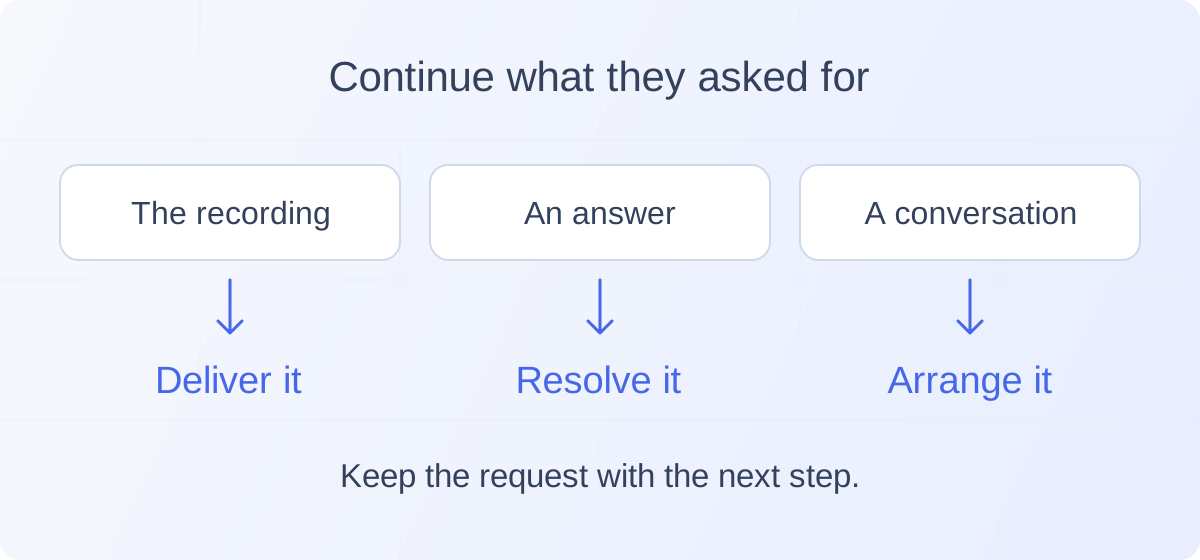
Look at what disappeared in that export: the question one person asked about their rollout, the request for the spreadsheet, the attendee who explicitly wanted to speak with the team. Good follow-up delivers the promised resources, answers outstanding questions and gives requested sales conversations an owner. Attendance alone cannot tell you which of those someone needs.
You spent an hour getting people to talk. Keep what they said.
Design the next step before the event
Start with the promise in the invitation. If the session teaches people how to improve lead routing, follow-up should help them improve that process. A calendar link is a useful addition for someone who wants help applying it. It is a poor substitute for the worksheet they were promised.
Give attendees a clear way to request that help during the session. “Want to discuss how this would work with your data?” describes a conversation they can choose. Someone selecting that option gives sales more to work with than a viewing-duration score.
Prepare for questions too. Name the person who will capture unanswered ones, confirm who can answer them and decide how the attendee receives the response. A question about a specific integration should reach the person who can establish what it supports.
Keep that process simple enough to run when the presenter has another meeting immediately afterward.
Follow the question into the first message
Suppose an attendee asks, “Can each region keep its own qualification rules while we use one CRM?”
If the answer is straightforward and approved, send it. If it depends on the setup, explain what needs checking and ask the necessary clarification. If the person requests a walkthrough, give the rep the original question and the answer already provided.
Now the first message has a purpose:
You asked about keeping regional qualification rules in one CRM. We need to check which rules differ and how account ownership works. Would it help to work through one example with our team?
Use that wording only when it accurately describes the open issue. A specific reference is useful because it continues the discussion; adding a name and company to a generic demo request does not do the same work.
Some questions will be educational. Answering “Where can I find the template?” should not require a qualification call. Our article on Lead Gen Forms and landing pages makes the same point about the original offer: deliver what the person requested before asking for another commitment.
Make sure the systems agree
Before starting the follow-up, check existing relationships. An attendee may already be a customer, have a meeting booked or be working with an account executive. Their question still deserves attention. The account owner should know about it before a second rep sends a fresh introduction.
Also check what the event platform, marketing automation and sales sequence will each send. The host's helpful reply can get buried beneath a recording email, a missed-you email and two requests to book.
Give each message a job. Suppress the ones made unnecessary by a reply, a booking or a declined offer. Check the completed journey with a test registration, including someone who registers but cannot attend. They should receive the recording without being thanked for a conversation that never happened.
Bring the right evidence to the event review
Keep registrations and attendance in the report. Add the questions still awaiting an answer, the people who requested help and what happened to those requests. Follow subsequent meetings into accepted opportunities using your usual definitions.
A webinar can help an existing deal without creating a new one. Record that contribution separately. A large audience with few sales requests can also be a useful educational event; judge it against the purpose you set before launch.
For the next event, hand sales a short list of people who asked for their involvement, with the reason beside each name. Deliver the recording and resources to everyone who requested them. Assign the unanswered questions.
The morning after the webinar should feel like the conversation is continuing.