
At one enterprise software vendor, a discount above 60% required the CEO’s approval. The executives knew salespeople had an incentive to move deals across quarter-end. They believed the approval process kept the cost under control. Then an economist used their own contracts to estimate what the timing incentives had cost them. Ian Larkin’s study, pp. 6 and 21
Larkin studied 7,912 deals that salespeople based in North America closed at that company from 1997 through 2003. Its commission plan paid reps a higher rate as their quarterly sales climbed. Reps agreed to lower prices in the quarters when closing the deal paid them more. Larkin estimated that the resulting pricing decisions cost the vendor 6% to 8% of revenue. The size of the estimate surprised its executives. It came from one company with one pay plan, and the study measured a cost of the plan without estimating all its benefits. Journal of Labor Economics
The question I’d take into a revenue meeting is smaller. Pick a discounted deal that landed in the last week of your quarter. Find the last offer the buyer could actually have signed. What did your company get for the difference?
Compare the two offers the buyer saw
Match the seats, scope, term and service obligations before comparing prices. A discount off a list price the buyer never saw tells you very little. The previous written offer tells you what changed in the negotiation.
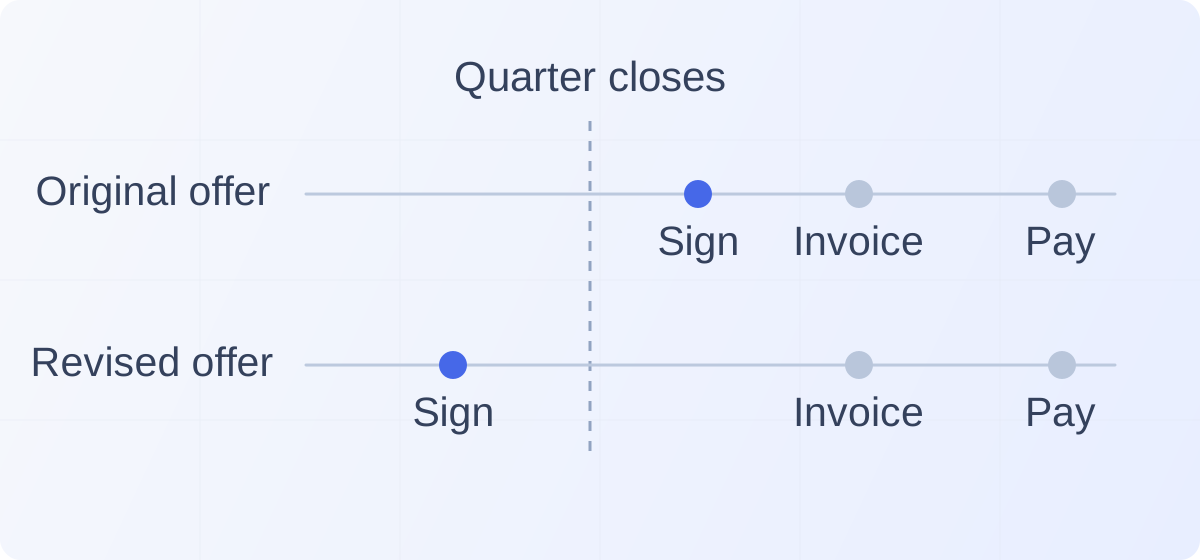
Start with the dates. Put the signature, service start and payment due dates from both offers side by side. Check the actual cash receipt when it comes in. A customer can sign on Friday and still start and pay on precisely the same dates they would have if they signed on Monday. Your business did gain a binding commitment a few days earlier. Ask the deal owner what risk those few days removed. The customer may keep the lower price for years.
A concession can also buy better terms. Annual prepayment, a firm volume commitment or a longer noncancelable term gives finance something it can value. Include the cost of any extra support and the effect of any renewal price protection. A minimum in the signed order is worth counting. An enthusiastic discussion about expansion is worth following up.
Give a claim that the discount saved the deal a fair test
The hardest case is a buyer who would otherwise walk. Ask the rep who set the ceiling, when the buyer first raised it, and what approvals would still be outstanding at the revised price. Record the answer before approving the exception. A budget owner’s written limit is stronger evidence than a seller’s recollection after the deal closes. It can also lead to a better offer, such as a narrower first deployment the buyer can fully fund.
For a standing quarter-end promotion, ask finance a different question. How many additional wins would it take to recover the margin given up on customers who would have signed anyway? Use the contribution per contract after delivery costs under each offer. The answer gives marketing and sales a hurdle to clear before they run the promotion again.
Look past the last day of the quarter
Give RevOps every opportunity with a written offer open during the quarter. Include buyers who held out, buyers who paid the original price and buyers who walked. Then wait a normal buying cycle and see which open deals eventually closed. Judging the two groups on the last day of the quarter gives an offer designed to move signatures a built-in advantage.
This is where the CMO has a stake. Before renewing a campaign credited with those bookings, check the sequence. What had the buyer already approved before the campaign reached them? What did they do afterward? Bringing the budget owner into the purchase for the first time is evidence worth taking to the next planning meeting. A signature that followed both a campaign touch and a price cut leaves the contribution of each uncertain. Compare opportunities at a similar stage and remember that reps choose whom to invite and whom to discount.
I’d change one line on the next approval request. Have the deal owner write down what the buyer is committing to in exchange for the lower price. Have finance value it, and bring the two offers back after the payment comes due. Over time, that gives the CRO and CMO a record of which concessions bought cash, reduced a documented risk or secured business worth having at the new price. It also makes the expensive answer easy to spot. Sometimes all the company bought was Friday.